Stocks vs. Real Estate vs. Treasury Bonds: Which Investment Is Right for You as a Beginner?
Michele Beauvoir · November 5, 2026 · 5 min read
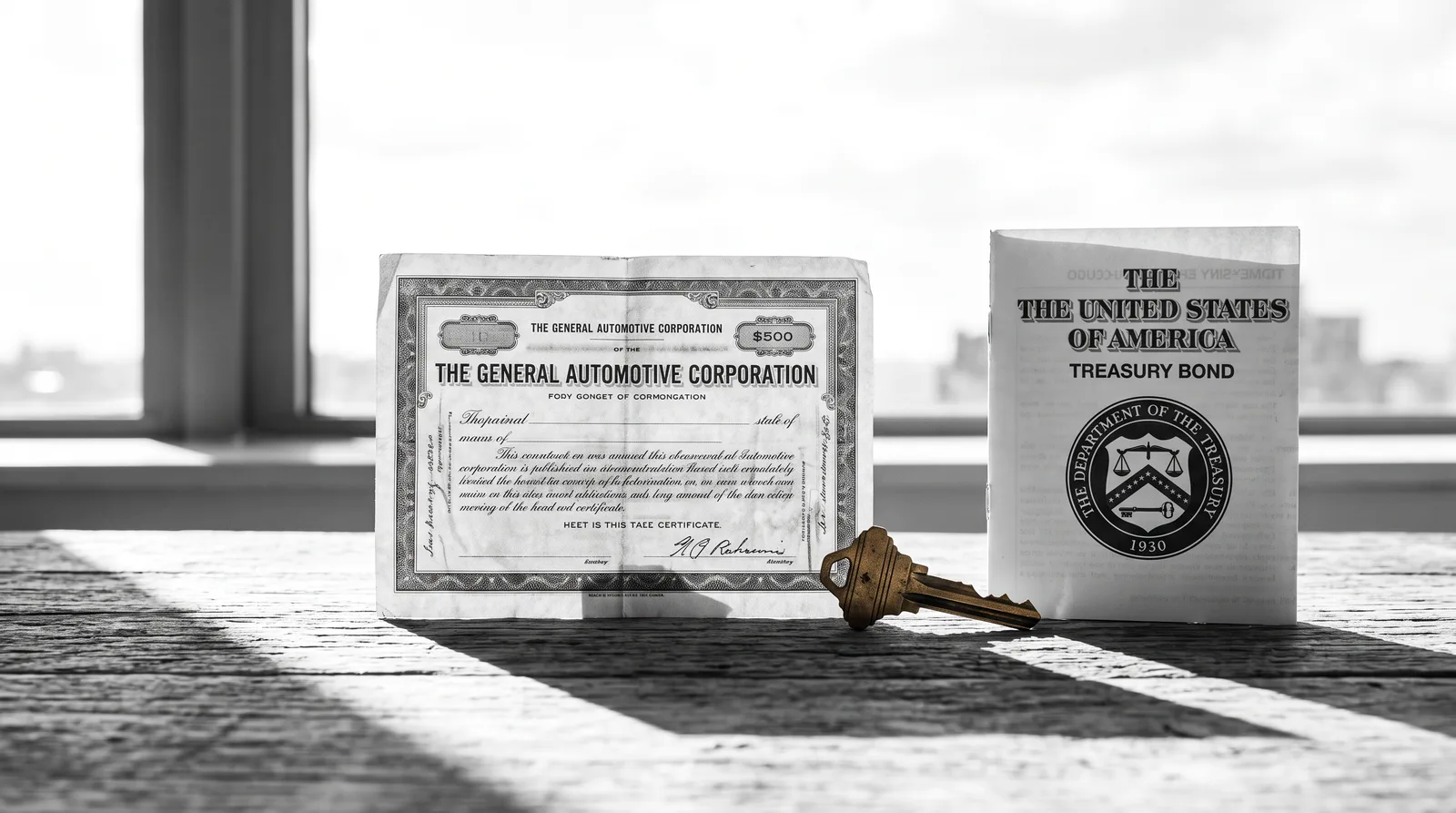
Picking your first investment feels like standing at a crossroads with no road signs. Everyone seems to have an opinion — your coworker is flipping houses, your cousin is day-trading, and your parents keep mumbling something about savings bonds. Before you do anything, slow down. The best investment for a beginner isn't whoever's winning right now. It's the one that fits your risk tolerance, time, and goals. Let's lay all three major asset classes out in plain language so you can decide with clarity.
The Three Contenders at a Glance
| Stocks | Real Estate | Treasury Bonds | |
|---|---|---|---|
| Minimum to start | ~$1 (fractional shares) | $3,000–$20,000+ (down payment or REIT) | $100 (TreasuryDirect.gov) |
| Risk level | Medium–High | Medium | Low |
| Time commitment | Low–High (your choice) | High (unless passive) | Very Low |
| Liquidity | Very High | Very Low | Low–Medium |
| Return potential | High | High | Low–Medium |
Stocks: High Ceiling, Turbulent Ride
Stocks are ownership slices of a company. When the company grows, your slice is worth more. When it stumbles, so does your balance.
What you actually do: Open a brokerage account (Fidelity, Schwab, and Charles Schwab are all free to open), deposit money, and buy shares or ETFs — exchange-traded funds that bundle hundreds of stocks into one purchase. An S&P 500 index ETF, for example, lets you own a tiny piece of 500 of the largest U.S. companies all at once.
The honest risk: Stocks can drop 20%, 30%, or even 50% in a bad year — and they won't warn you first. The key word is temporary for a diversified portfolio held over the long term, but that volatility is very real and emotionally hard to sit through when you're new.
Who this fits: You have at least a 5-to-10-year horizon, you won't need this money soon, and you can stomach watching your balance dip without panicking and selling.
A practical first step: Open a Roth IRA (a tax-advantaged retirement account) and invest your contributions in a low-cost total market index fund. You grow tax-free and your money is working in the background every single day.
Real Estate: Tangible, Powerful, and Demanding
Real estate means owning property — a rental house, a duplex, a commercial unit — and collecting income from it, or buying it low and selling it higher.
What you actually do: At minimum, you're researching markets, qualifying for a mortgage, managing tenants or a property manager, handling maintenance surprises, and navigating local landlord-tenant law. It's a business, not a passive button.
The honest risk: Real estate is illiquid — you cannot sell a house on a bad Tuesday like you can sell a stock. If a tenant stops paying rent, you may face months of vacancy and legal costs before you can move on. Property values also fluctuate with local economies in ways national markets don't.
The good news: Real estate offers leverage that stocks don't. You can control a $300,000 asset with $30,000 down. It also comes with real tax advantages — depreciation deductions, the 1031 exchange for deferring capital gains, and mortgage interest deductions — that experienced investors use strategically.
Don't want to be a landlord yet? REITs (Real Estate Investment Trusts) let you invest in real estate portfolios through the stock market with as little as a few dollars, no tenants required. That's a smart beginner bridge.
Who this fits: You have more capital to deploy, you're willing to treat it like a business, and you want hard-asset security with income potential.
Treasury Bonds: Boring on Purpose
Treasury bonds are loans you make to the U.S. federal government. They pay you a fixed interest rate over a set period — 2 years, 10 years, 30 years — then return your principal. They are backed by the full faith and credit of the U.S. government, making them the closest thing to a guaranteed return available.
What you actually do: Go to TreasuryDirect.gov, open a free account, and buy bonds starting at $100. That's genuinely it.
The honest trade-off: Safety costs you growth. Treasury yields move with interest rates and rarely outpace inflation significantly over the long run. You will not get rich here — but you will not lose your principal either.
Who this fits: You need this money within one to three years, you are building an emergency reserve, or you want to balance a riskier portfolio with a stable anchor.
So Which One Is Right for You — Right Now?
Here's a simple decision filter:
- If your timeline is 10+ years and you can be patient through dips → Start with stocks inside a Roth IRA or 401(k). Keep costs low, diversify widely, and don't touch it.
- If you want real estate but lack capital or experience → Start with REITs to learn the market, then graduate to direct ownership.
- If you need this money within 1–3 years or you just can't stomach risk yet → Treasury bonds or high-yield savings accounts first. Protect the principal while you learn.
Here's the truth nobody tells beginners: you don't have to choose just one — and you probably shouldn't. A diversified approach across asset classes smooths out the rough patches any single market will inevitably hit.
The first dollar you invest is never your best-deployed dollar. It's your most important one, because it proves to you that you can do this. Start where you're genuinely comfortable, understand what you own, and build from there.
That's what building real, lasting wealth actually looks like — and there's a lot more to unpack in each of these universes. Inside Wealth Unlocked, we go deep on the mechanics, tax strategies, and global platforms behind every one of these asset classes, in exactly the plain language you just read here. When you're ready to go further, the door is open.