What Is a Roth IRA and Why Every Beginner Investor Should Open One First
Michele Beauvoir · November 5, 2026 · 4 min read
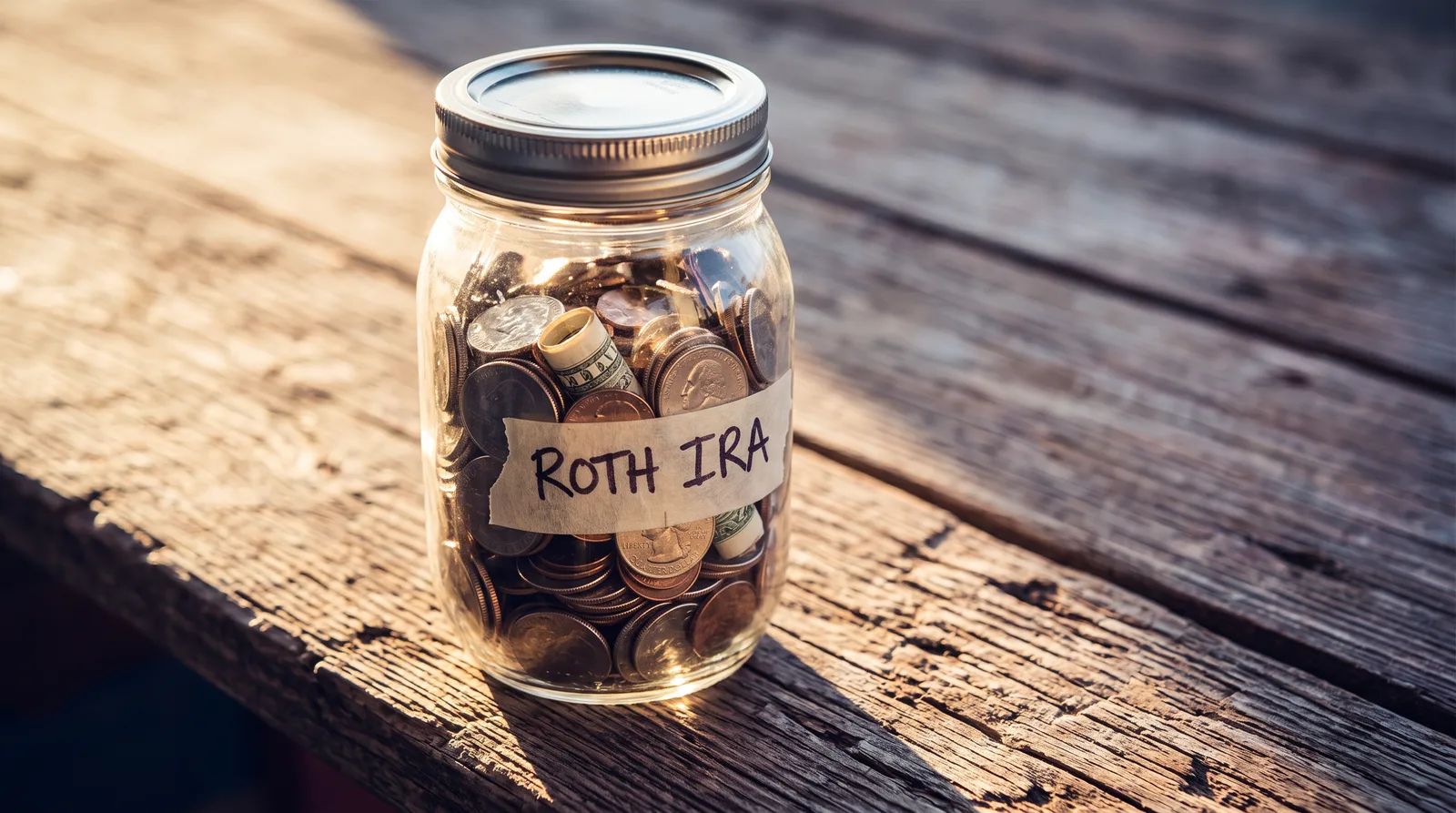
If you're new to investing and you've heard the term "Roth IRA" thrown around but never quite understood what it actually does — this post is for you. I want to break it down in plain English, show you the mechanics that make it so powerful, and make the case that before you buy a single stock, an ETF, or anything else, opening a Roth IRA should be your very first move.
What a Roth IRA Actually Is
IRA stands for Individual Retirement Account. It's not an investment itself — it's a container that the IRS allows you to put investments inside, with special tax treatment attached.
A Roth IRA specifically is funded with after-tax dollars. That means you contribute money you've already paid income tax on. In exchange, the IRS gives you something extraordinary: every dollar of growth inside that account — dividends, capital gains, compounding interest — is completely tax-free, forever. And when you withdraw in retirement (age 59½ or older), you owe zero taxes on any of it.
Compare that to a traditional 401(k) or traditional IRA, where you get a tax break now but pay ordinary income tax on everything you pull out in retirement. With a Roth, you pay taxes once — on the seed — and never again on the harvest.
The Math That Makes This Remarkable
Let's make this concrete. Say you contribute $7,000 to a Roth IRA this year (that's the 2024 annual contribution limit for most people under 50). You invest it in a simple broad-market index fund. Over 30 years, assuming a hypothetical average annual return, that $7,000 could grow into a much larger sum.
Here's the critical point: in a taxable brokerage account, you'd owe capital gains tax on all that growth. Inside a Roth IRA, you owe nothing. Not a penny. The IRS has already been paid. You're done.
That tax-free compounding is the whole game. It's why financial educators consistently point to the Roth IRA as the most powerful account available to everyday Americans.
Who Qualifies?
To contribute to a Roth IRA in 2024, you need:
- Earned income — wages, salary, freelance income, or self-employment income. Investment income alone doesn't qualify.
- Income below the phase-out threshold — for single filers, contributions begin phasing out at $146,000 in modified adjusted gross income (MAGI) and are eliminated at $161,000. For married filing jointly, the phase-out runs from $230,000 to $240,000.
If you're a beginner investor, there's a good chance you're well within those limits. The Roth IRA was essentially designed for you.
Two More Features That Set It Apart
You can withdraw your contributions anytime, penalty-free. This is widely misunderstood. Because you already paid tax on the money going in, the IRS lets you pull out your contributions (not growth) at any time without penalty or tax. This makes the Roth IRA remarkably flexible — it's not money locked in a vault until you're 65.
It has no Required Minimum Distributions (RMDs). Traditional retirement accounts force you to start withdrawing money at age 73, whether you need it or not. A Roth IRA has no such requirement. You can let it grow for your entire lifetime and pass it to heirs if you choose.
Where Do You Actually Open One?
This is simpler than most people expect. Major brokerages like Fidelity, Schwab, and Vanguard all offer Roth IRAs with no account minimums and commission-free trading. You can open an account online in about 15 minutes. Once funded, you can invest in stocks, ETFs, mutual funds, bonds — essentially whatever the brokerage offers.
My general recommendation for beginners: start with a low-cost, broad-market index fund. Keep it boring. Let the tax-free compounding do the heavy lifting.
Why This Should Be Your First Account
Before you open a taxable brokerage account, before you buy crypto, before you try to pick individual stocks — open and max out your Roth IRA. Here's the logic in one sentence: every dollar of gains you earn inside a Roth IRA is worth more than the same dollar earned anywhere else, because you'll never share it with the IRS.
It's the highest-leverage starting point in personal investing, full stop.
The Roth IRA is one piece of a much larger investing picture — one that includes stocks, real estate, government securities, and global platforms. But if you're standing at the beginning of your investing journey right now, this is the door you walk through first.